
Dirt, Gravel and Grading in Rockford, IL
Dirt and gravel for beds, borders and paths, plus grading. Free quotes.
- Owner-operated
- Open Mon-Sun 8 AM to 7 PM
Serving Rockford, Loves Park, Machesney Park, Roscoe, Rockton, South Beloit, Belvidere and Poplar Grove, IL, and Beloit, WI.
What dirt, gravel and grading covers
Six inches in ten feet. That is the fall the International Residential Code asks for around a foundation: the ground drops at least 6 inches over the first 10 feet away from the wall. Soil settles, and a yard that met that number the day the house went up can miss it today.
Dirt, gravel and grading shape the ground: filling low spots, building up beds, laying gravel for borders and paths, and reshaping a slope. Stateline Pros Landscaping does this for homes around Rockford, Roscoe and Loves Park.
Check the grade before you pay for a drain
If the ground slopes toward your house, no drain fixes that.
Depth is where jobs fail
Penn State Extension calls for at least 4 to 6 inches of good topsoil, measured after it settles. Illinois Extension aims for 6 inches or more of well-prepared soil. We spread a little deeper than the target, because fresh soil settles.
Two rules we hold to
First, we mix the new topsoil into the top of the old ground, about 2 inches of topsoil into the upper 2 to 3 inches of subsoil, so water doesn't stall at a hard line between layers. Second, we skip the sand. Illinois Extension advises against it for clay soils. We also don't bury construction debris. Extension warns it causes lawn problems later.
Included
What is included in dirt, gravel and grading
- 01A yard visit with a string and a level to measure the fall away from your foundation
- 02Fill for low spots and settled areas, graded to drain
- 03Topsoil spread for new lawns and beds at the depth the job needs
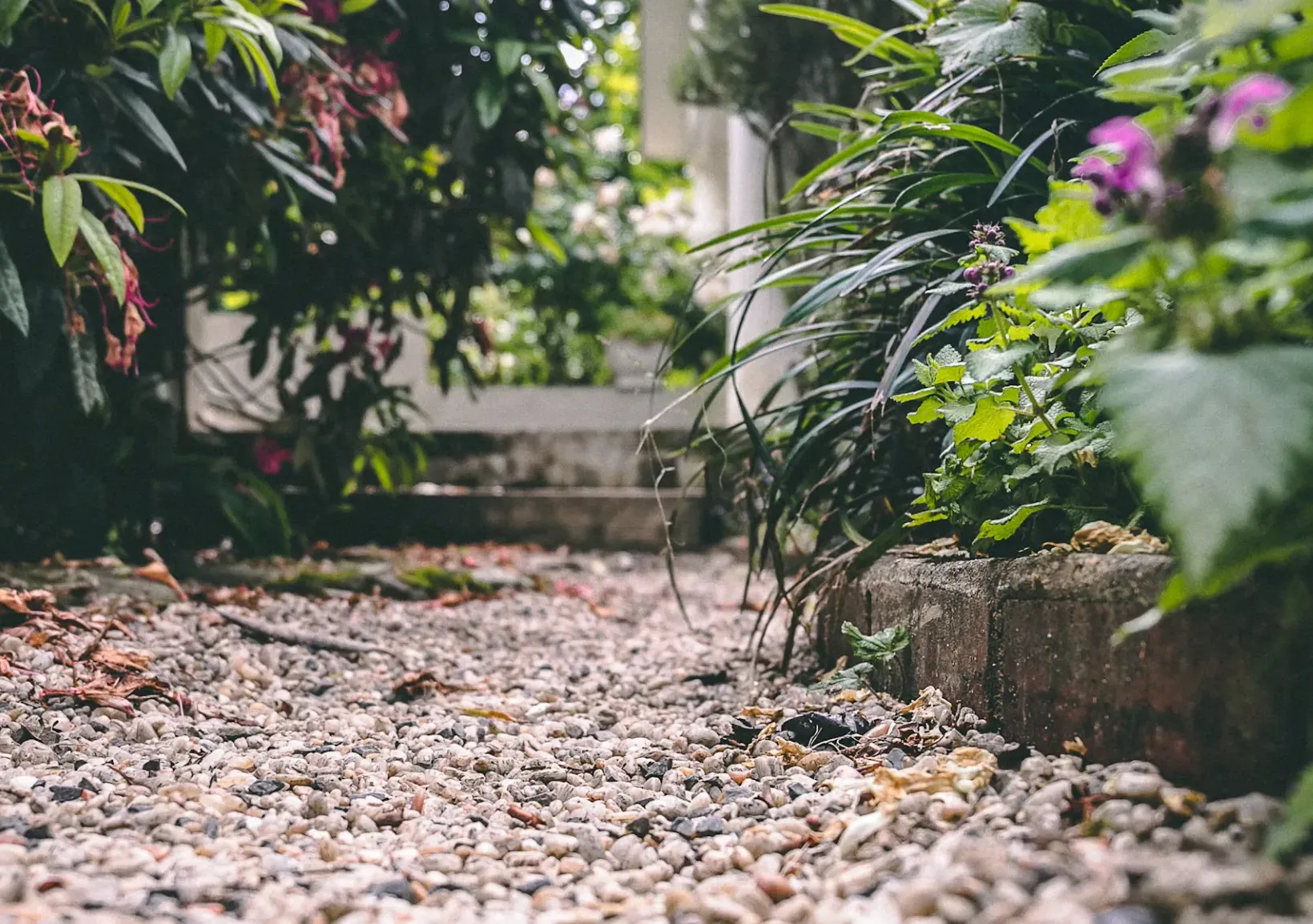
- 04Crushed stone and decorative gravel delivered and spread for borders, paths and pads
- 05A slope or swale reshaped so runoff leaves the yard
- 06Rocks, stumps and debris pulled out of the ground we regrade
- 07A raked finish grade, ready for seed, sod or mulch
Not included / Offered by our other services
What is not included in dirt, gravel and grading
- Retaining walls, patios and walkways in stone or pavers (see hardscape installation)
- Buried drain pipe, sump pumps and foundation waterproofing
- Grading for new construction, which needs engineered plans
- Mulch (see mulch installation)
- Sod and seed (see sod installation)
- Planting beds and design (see landscape design and planting)
- Tree removal and stump grinding
How much topsoil a lawn needs
| Topsoil depth | Area one cubic yard covers | A 5,000 sq ft lawn needs |
|---|---|---|
| 2 inches (low spots, beds) | 162 sq ft | about 31 cubic yards |
| 4 inches (minimum for a lawn) | 81 sq ft | about 62 cubic yards |
| 6 inches (better over hard ground) | 54 sq ft | about 93 cubic yards |
How dirt, gravel and grading works
- 01. Call or send details Give us your address and tell us what you want fixed: a wet spot, a bare patch, a path, a bed. A photo after rain helps.
- 02. We walk the yard We run a string and a level along your foundation, check where the water goes and mark the low spots.
- 03. You get a free quote It lists the material, the depth, the cubic yards and the dates we aim for.
- 04. We deliver and rough grade Material gets dumped, spread and shaped to the slope.
- 05. We finish grade and clean up The surface is raked, the debris leaves with us, and you get a walkthrough.
Best time of year for dirt, gravel and grading
Wait for workable soil. Illinois Extension says soil worked when it is too wet or too dry loses its structure, and that recovery from it can take years. So we don't grade a soggy yard in March. Book in winter for spring. Book in June for a July grade.
- 01Main season
Spring
Once the soil is no longer soggy
- Fill
- Topsoil
- Gravel
- Bed work
Extension: work soil when it is neither too wet nor too dry.
- 02Before seeding
July to mid-August
Before the seeding window
- Finish grades
Finish grades on lawns you plan to seed. Seed goes down August 15 to September 15 in northern Illinois, per Purdue.
- 03Before winter
Fall
- Gravel
- Borders
- Paths
- Last topsoil loads
Beds and paths are ready before winter.
What affects the price of dirt, gravel and grading
- Volume. The table above shows how fast it climbs: a 5,000-square-foot lawn takes about 62 yards at 4 inches and 93 at 6.
- Material. Topsoil, fill, crushed stone and decorative stone all cost different amounts per yard.
- Access. A wide-open driveway lets us dump and spread by machine. A narrow gate means wheelbarrows.
- How much has to move. A slope that needs fill brought in costs more than one we can reshape with what is on site.
Oval planting bed
Fall leaf cleanup
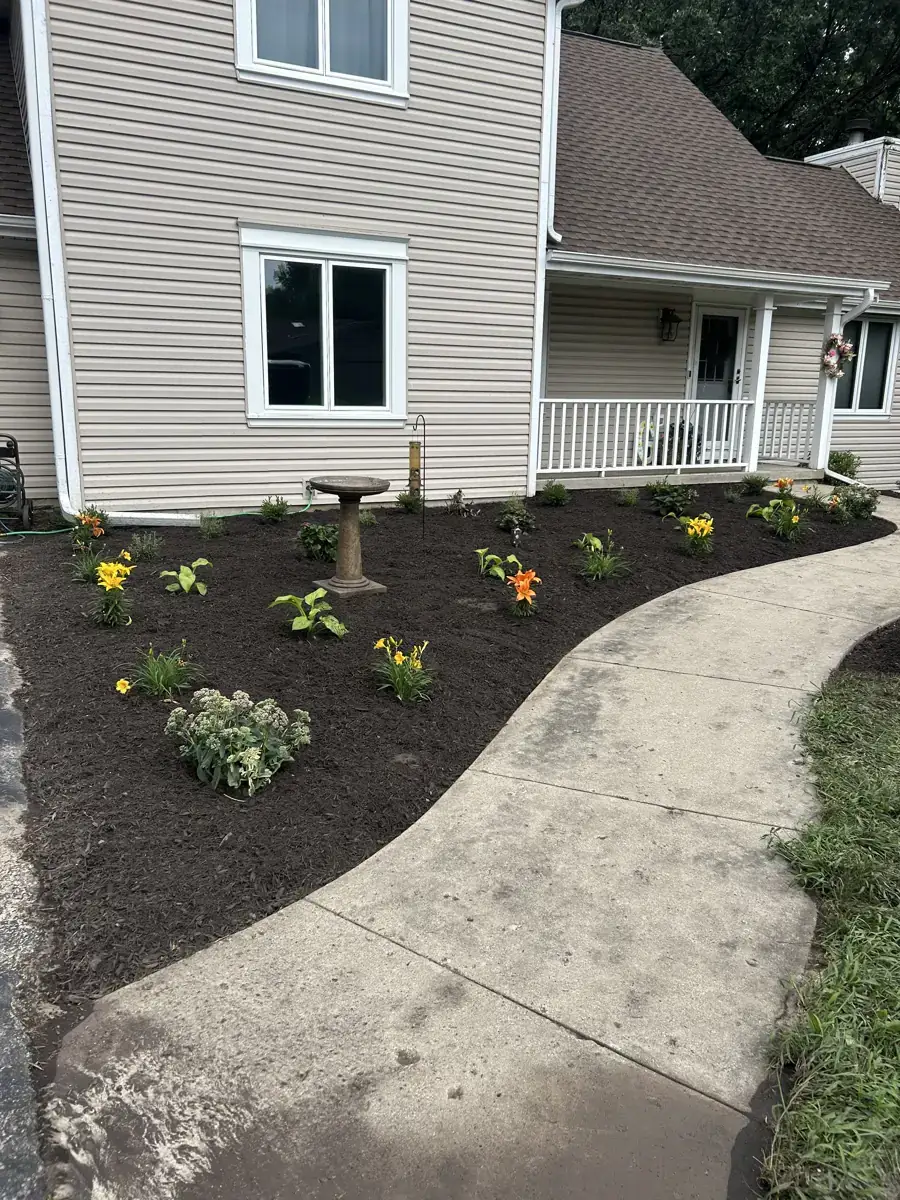
Planting bed with flowers
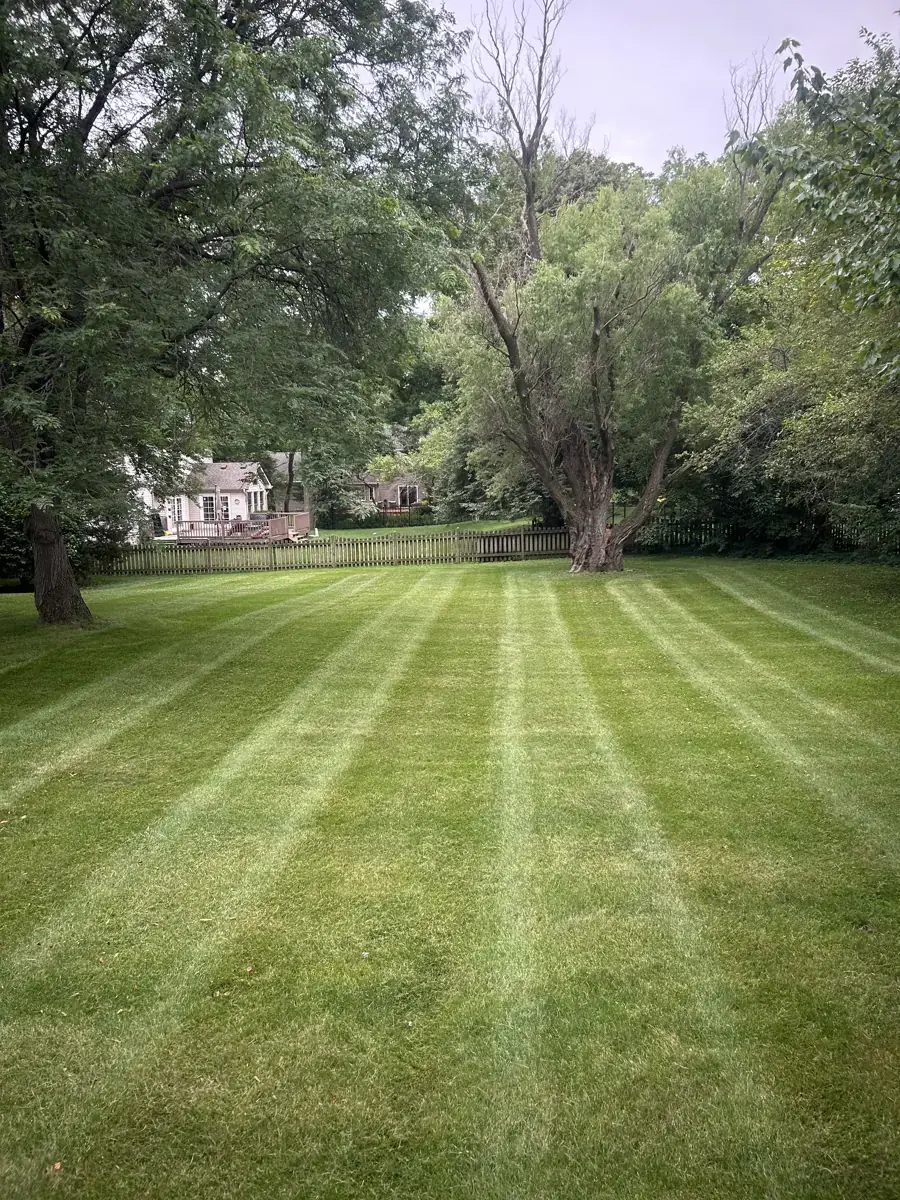
Striped lawn
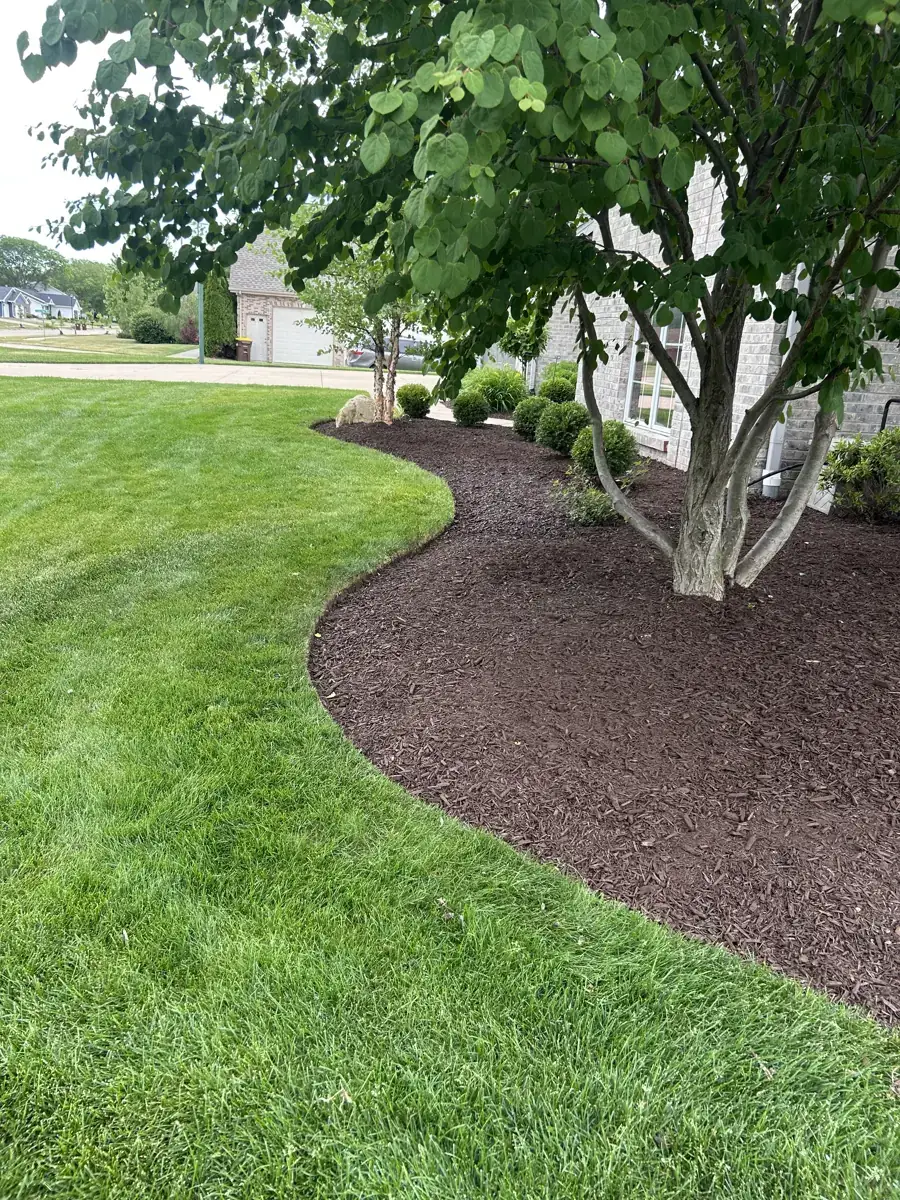
Curved mulch bed
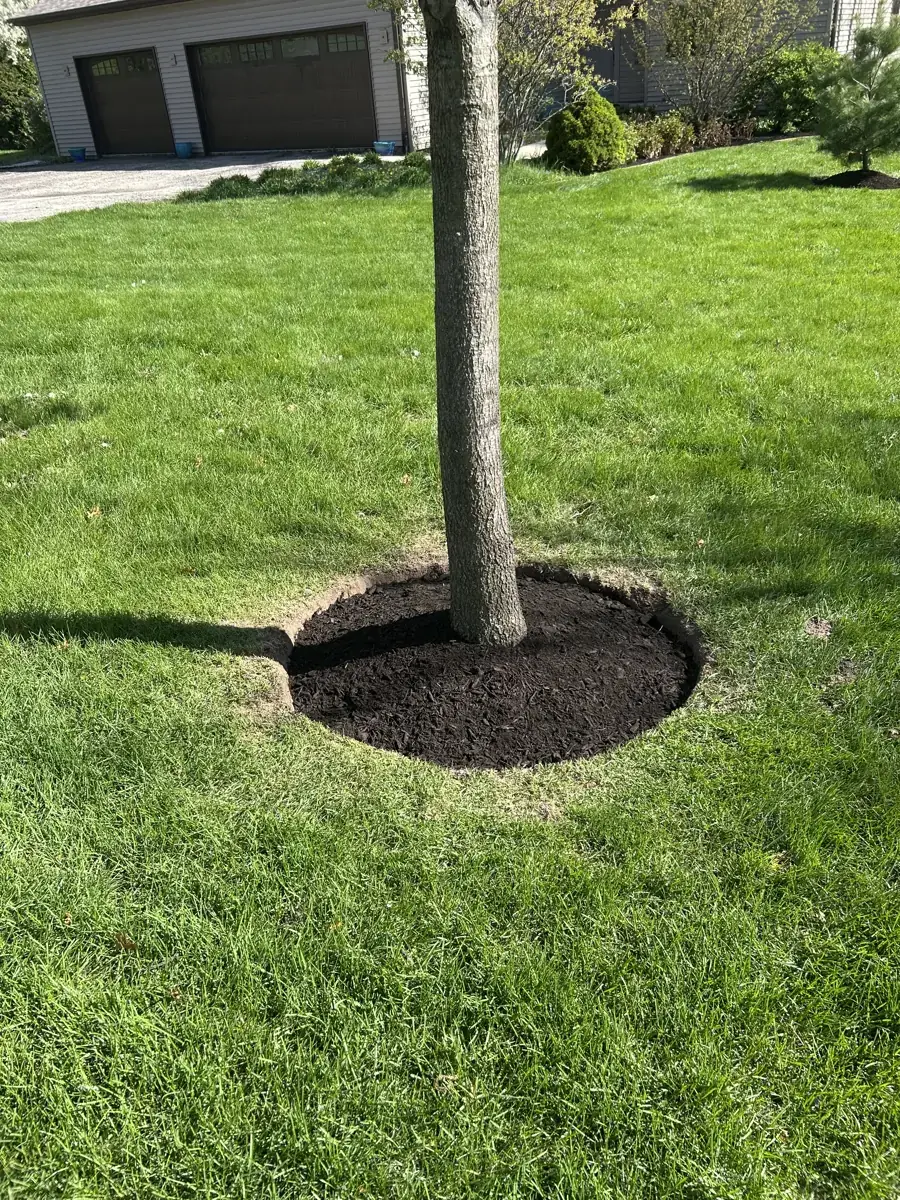
Mulch ring around a tree
Dirt, gravel and grading in nearby towns
We also work in these areas. Much of Winnebago County sits on silty soil over glacial till that drains slowly, so water stays where the grade lets it. That makes the slope matter, and we look at yours before we quote.
Related services
Questions homeowners ask about dirt, gravel and grading
Do you give free quotes?
Yes. Call (773) 971-2821 or send a few details: your address, what you want fixed and a photo if you have one. We walk the yard and measure the slope before we write the quote, because the cubic yards decide the price, and then you get a number with no pressure.
Where do you work?
We work in Rockford, Loves Park, Machesney Park, Roscoe, Rockton, South Beloit, Belvidere and Poplar Grove in Illinois, plus Beloit, Wisconsin. Not sure about your address? Call and ask, and we'll tell you straight whether it's in our range before you spend time on a quote.
How much should my yard slope away from the house?
At least 6 inches over the first 10 feet, which is the International Residential Code number for foundation drainage. Past that zone, Illinois Extension asks for a gentler 1 to 2 percent slope on a lawn. We check yours with a string and a level on the free visit.
How much topsoil does a new lawn need?
Penn State Extension says at least 4 to 6 inches of good topsoil, measured after it settles, and Illinois Extension aims for 6 inches or more of prepared soil. A 5,000-square-foot lawn takes about 62 cubic yards at 4 inches and 93 at 6. We spread a little deeper than the target because it settles.
Can you fix water pooling near my foundation?
If the cause is the grade, yes. We measure the fall, add fill where the ground has settled and reshape the slope so water leaves. If the water comes from a gutter or a leak, grading won't solve it, and we'll say so on the visit. We don't install buried drain pipe or waterproof foundations.
Should I add sand to clay soil?
No. Illinois Extension advises against sand for clay soils and points to organic matter instead: compost, rotted manure, peat or quality topsoil. We work those amendments into the top 6 to 8 inches, the depth Extension gives for soil prep, so the lawn gets one continuous root zone.
What gravel do you use for paths and borders?
Angular crushed stone in an IDOT size grade, such as CA-6 at about 3/4 to 1.5 inches. Suppliers describe the angular pieces as locking together, which resists shifting. For a decorative border we use a finer decorative stone. Tell us the look you want and we'll match the stone to the job.
Get a free quote
Call (773) 971-2821 or send a few details. Open Mon-Sun 8 AM to 7 PM.